
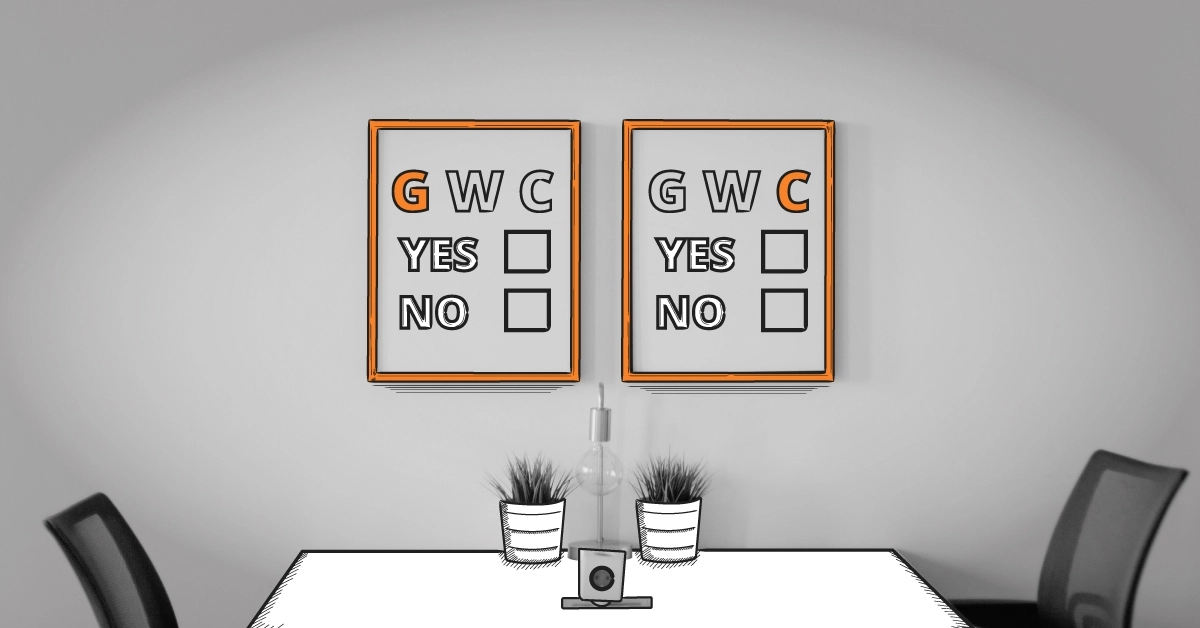
What is GWC?
GWC™ is the EOS® tool used to determine if a person is in the right seat. It stands for Gets it, Wants it, and has the Capacity to do it. A person must be a clear yes on all three to be in the right seat. GWC is scored black and white: yes or no. No maybes. No mostly. No kind of.
GWC is one of the simplest and most consequential frameworks in the EOS Toolbox. It removes ambiguity from people decisions that most companies agonize over for years.
Why GWC exists
People problems are the number one source of frustration for entrepreneurs. The root cause is almost always the same: the wrong person is in the wrong seat.
Most managers struggle to articulate why. They sense something is off but cannot name it. They try coaching. They try training. They try patience. Nothing works.
GWC names it.
When someone is underperforming, ask three questions:
- Do they Get it?
- Do they Want it?
- Do they have the Capacity to do it?
One of those three will be no. Usually obviously so, once you ask. The fix flows from the answer.
The three parts of GWC
Get It
Does the person truly understand the role, the responsibilities, the culture, and the expectations of the seat? Do they get the what, the how, and the why of the job? Do they see the connections between their seat and the rest of the company?
Some people will never get it, no matter how much training. The brain is not wired for it. That is not a character flaw. It is a fit problem.
Want It
Does the person genuinely want the job? Not the title. Not the paycheck. Not the prestige. The actual day-to-day work of the seat.
Many people are in seats they do not want. They were promoted into them. They accepted them to please a parent. They are doing the job because it is available, not because it calls to them.
A person who does not want the job will never do it well, even if they Get it and have Capacity.
Capacity
Does the person have the time, skills, knowledge, emotional capacity, physical capacity, and intellectual capacity to do the job well?
Capacity covers everything from “do they have enough hours in the day” to “can they handle the pressure” to “do they have the mental bandwidth for this kind of complexity.”
Capacity is the most often misdiagnosed of the three. A smart person in a demanding seat may simply not have the capacity for the scope of the role. Not a character issue. A wiring issue.
How to score GWC
GWC is scored yes or no. Black and white. Not yellow. Not maybe.
If you cannot answer yes with full confidence, the answer is no.
For a person to be in the Right Seat, all three answers must be yes.
- Yes, Yes, Yes = Right Seat
- Yes, Yes, No = Wrong Seat (capacity issue)
- Yes, No, Yes = Wrong Seat (wants issue)
- No, Yes, Yes = Wrong Seat (gets it issue)
Why GWC is yes or no
The instinct to hedge is strong. “They mostly Get it.” “They Want it enough.” “They have Capacity if we give them more support.”
Resist the hedge.
When a manager says “mostly,” the answer is no. When a manager says “enough,” the answer is no. The ambiguity itself is the signal.
The black-and-white scoring is what makes GWC useful. It forces a decision. It ends the years of tolerating mediocrity.
How GWC fits into the People Analyzer
GWC is one half of the People Analyzer™. Core Values are the other half.
- Core Values answer the Right Person question.
- GWC answers the Right Seat question.
The People Analyzer rates a person against both, quarterly. The result tells the leadership team whether to keep, coach, or move each team member.
Using GWC in hiring
GWC is not just for existing employees. It is a powerful filter for interviewing candidates.
For every open seat, build the five to seven major roles from the Accountability Chart™. In the interview:
- Ask behavioral questions that test whether they Get it. Can they describe how they would approach the core responsibilities?
- Ask what they actually Want. Not what they think you want to hear. What energizes them? What drains them?
- Test for Capacity. What is their track record of scope and pressure? Do they have the bandwidth for this seat?
Candidates who are a clear yes on all three join the team. Candidates who are anything less do not.
Using GWC for promotions
Promoting the wrong person is one of the most costly mistakes a leader can make. GWC catches it before it happens.
Just because someone is great in their current seat does not mean they will GWC the bigger seat. A top sales rep may not GWC a sales manager seat. A great technician may not GWC a leadership role.
Before every promotion, run GWC on the new seat. If any of the three is a no, the person stays where they are or gets a different path.
Common GWC mistakes
- Hedging the scoring. “They mostly Get it” is a no. Write it as a no.
- Confusing Want it with Like it. They may like the paycheck. They may like the team. They may not actually want the work.
- Assuming Capacity can be trained. Some capacity gaps close with coaching. Most do not. Be honest about which is which.
- Scoring a person in general instead of in the seat. GWC is always about a specific seat. A person can GWC Seat A and not GWC Seat B.
- Running GWC once and never again. As seats change, people may stop GWCing them. Revisit quarterly.
What to do when someone does not GWC
If a team member fails GWC, you have three options in order:
- Move them to a seat they can GWC. The simplest answer and often the best one. Sometimes the person is a great fit for a different seat that opens up on the Accountability Chart.
- Change the seat to fit them. Only if the seat is flexible and the role can genuinely shift. Rarely the right answer.
- Move them out of the company. If they cannot GWC any seat you have, they are in the wrong company. The kindest thing you can do for everyone, including them, is help them move on to a seat they can GWC somewhere else.
How GWC connects to the rest of EOS
- Accountability Chart. GWC is used to evaluate Right Seat against every seat on the chart.
- People Analyzer. GWC is one half. Core Values are the other half.
- Core Values. Answer the Right Person question. GWC answers the Right Seat question.
- Visionary™ and Integrator™ roles. Every Visionary-Integrator match is a GWC test.
Frequently Asked Questions
What does GWC stand for?
GWC stands for Gets it, Wants it, and has the Capacity to do it. It is the EOS test for whether a person is in the right seat.
How is GWC scored?
Yes or no. Black and white. If you cannot confidently say yes, the answer is no. All three must be yes for a person to be in the right seat.
What is the difference between GWC and Core Values?
Core Values answer the Right Person question: does this person share our values? GWC answers the Right Seat question: can this person do the work? Both are required.
Can someone GWC one seat but not another?
Yes. GWC is always about a specific seat. A great salesperson may not GWC a sales manager role. A great technician may not GWC a leadership seat.
How often should we use GWC?
Every quarter during the People Analyzer review. Also in every interview and before every promotion.
Is GWC trademarked?
Yes. GWC is a trademark of EOS Worldwide.
Related EOS Tools
Get the Right People in the Right Seats
Ready to stop tolerating the wrong people in the wrong seats? Start with a Free 90-Minute Meeting with a Professional EOS Implementer.