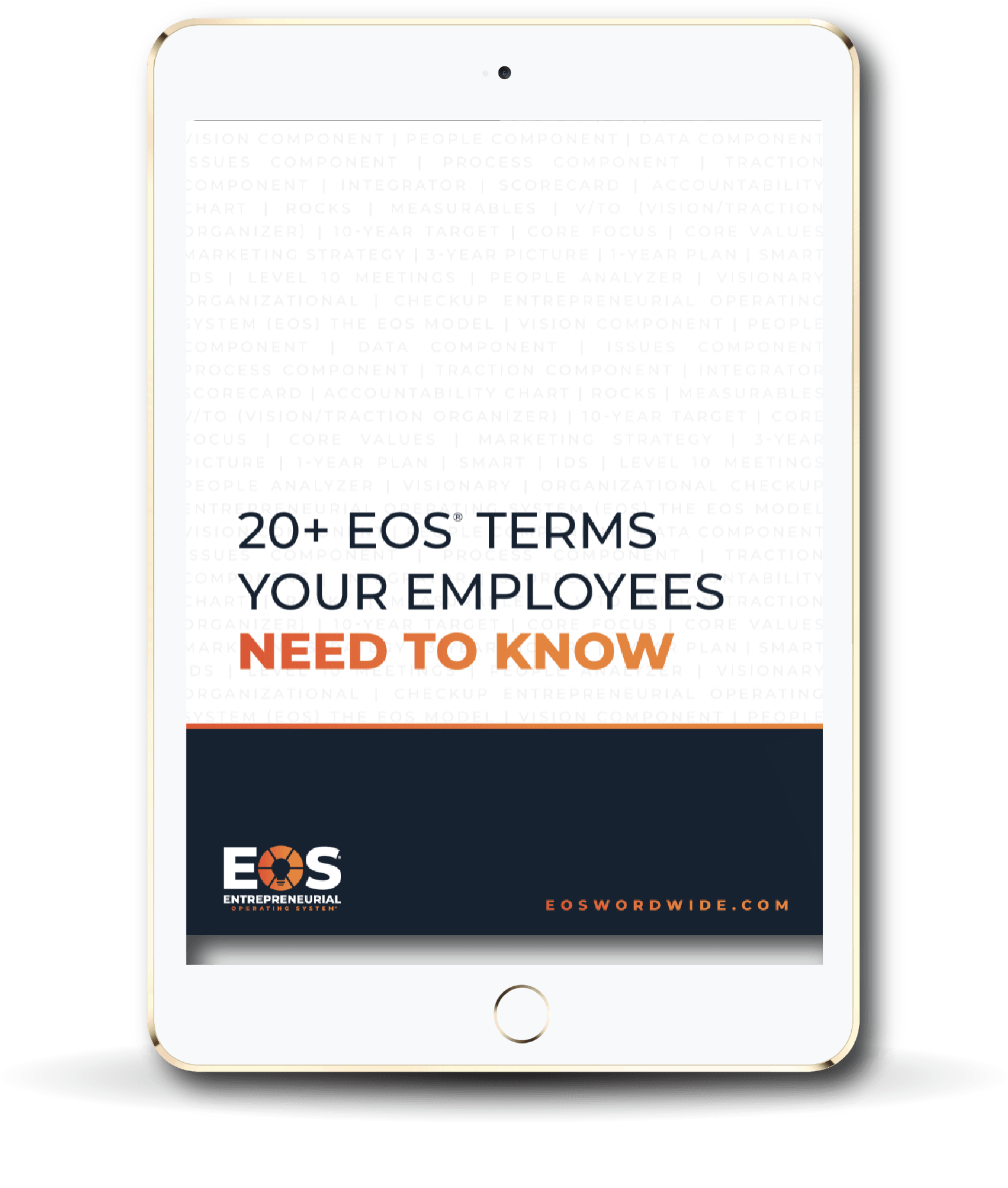
EOS is a language onto itself. Here are a few EOS terms from our glossary that will help you navigate the Entrepreneurial Operating System for the first time – or at least help clarify a term that you’ve heard before but are unclear about:
Entrepreneurial Operating System® (EOS®): A proven set of simple, practical tools that improves how people in an organization meet, solve problems, plan, prioritize, follow processes, communicate, measure, structure, clarify roles, lead, and manage.
The EOS Model®: Every business is comprised of Six Key Components™ as depicted by the EOS Model. Those six components are: Vision, People, Data, Issues, Process, Traction®. These must be managed and strengthened to create a healthy, well-run business.
Vision Component: Getting everyone in the organization 100% on the same page with where your company is going and how you’re going to get there.
People Component: Getting the right people in the right seats.
Data Component: Using a handful of numbers that give everyone an exact pulse on where things are and when they are off track.
Issues Component: Strengthening your organization’s ability to identify issues, discuss them, solve them, and make them go away forever.
Process Component: “Systemizing” your business by identifying and documenting the core processes that define the way to run your business.
Traction Component: Bringing discipline and accountability into the organization.
Integrator: The leader of a company’s leadership team. Integrators beat the drum, break the ties, harmoniously integrate other major functions in the organization, and accept ultimate accountability for achieving results.
Scorecard: An EOS Tool used to track a handful of numbers that give you a pulse on your business.
Accountability Chart™: Different from an organizational chart, an Accountability Chart defines the right structure for your company and clearly identifies who is accountable for what.
Rocks: The 3 to 7 most important things you must get done in the next 90 days. Employees will typically have 1-3 individual Rocks each quarter while leadership team members will typically have 3-7 individual Rocks.
Measurables: When companies use EOS, everyone “has a number” that is considered their measurable – something they do to contribute value to the organization that is measured on a consistent basis.
V/TO™ (Vision/Traction Organizer™): A two-page document that helps your leadership team define, document, agree on, and share the company vision.
10-Year Target™: A long-range, energizing goal for the organization, ranging from five years to twenty years out.
Core Focus: Your core focus defines what you are as a company to help you avoid “shiny stuff” and keep you focused on the areas where your business excels. It comes from the intersection of knowing “Why” your company exists and “What” you do in the world.
Core Values: A timeless set of guiding principles that define your culture and the behaviors you expect from each other. They help you determine who fits your culture and who doesn’t and they help you attract like-minded people to your team.
Marketing Strategy: The definition of your ideal customer and the most appealing message to attract them to your business. It should provide a laser-like focus for your sales and marketing efforts.
3-Year Picture™: A definition of what your company will look like, feel like, and be like in three years. The 3-Year Picture creates a powerful image of the future and helps everyone work towards the same vision.
1-Year Plan: Defines your objectives for the year by identifying and crystallizing your revenue target, profit target, and measurables, along with your top three to seven goals for the year.
SMART: Stands for Specific, Measurable, Attainable, Realistic, and Timely. Making goals and Rocks SMART is essential for creating crystal clear communication and for setting the right expectations between you and your team so everyone knows what “done” looks like.
IDS™: Also known as the Issues Solving Track™, IDS is the process your team uses to identify, discuss, and solve issues on an ongoing basis.
Level 10 Meetings®: A weekly meeting with a specific agenda designed to help you stay focused on what’s important, solve issues effectively, and keep your team connected.
People Analyzer™: A simple tool that pulls your core values and Accountability Chart together to help your organization identify if they have the right people in the right seats.
Visionary: Often the company founder, a visionary is a strategic thinker who always sees the big picture and is tuned into the future of your industry. Visionaries are usually great with big relationships and the culture of the organization.
Organizational Checkup®: A 20-question survey that helps measure a company’s strength in the Six Key Components.