

To run IDS (Identify, Discuss, Solve) in your first Level 10 Meeting, prepare your team to solve problems differently.
In the Entrepreneurial Operating System (EOS), IDS is at the heart of the Level 10 Meeting. Short for Identify, Discuss, Solve, it gives your team a way to solve problems for good instead of revisiting them week after week.
That can be an adjustment if your meetings usually involve lengthy updates, unfocused discussions, or difficulty reaching decisions. Even when everyone understands the goal, changing how your team approaches problems takes some preparation.
Here’s how to prepare your team, avoid common mistakes, and make the most of your first IDS session.
How Does IDS Work in a Level 10 Meeting?
IDS is the three-step process leadership teams use to identify, discuss, and solve their most important Issues during a Level 10 Meeting.
Also known as the EOS Issues Solving Track, IDS takes place during a dedicated 60-minute portion of the meeting, after your leadership team reviews its performance, priorities, and other updates.
Throughout the earlier sections of the meeting, your team captures problems, challenges, obstacles, opportunities, and new ideas that need attention on an Issues List. Rather than stopping to discuss each one, you save those conversations for IDS.
When it’s time to solve Issues, your team prioritizes the most important ones and works through them using three steps:
- Identify: Get to the root of the Issue rather than focusing on its symptoms.
- Discuss: Be open and honest. Get everyone’s thoughts on the table, and say each point once.
- Solve: Decide on a solution that addresses the root Issue for good. Make any action steps clear and assign an owner.
The goal isn’t to work through every Issue on your list. It’s to solve the most important Issues within the time set aside for IDS.
By separating reporting from problem-solving, the Level 10 Meeting helps your team stay focused on its most important priorities. That structure only works when everyone understands and follows it.
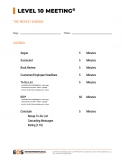
Turn weekly meetings into focused time for solving Issues and creating accountability.
How Should You Prepare for Your First IDS Session?
Preparing for your first IDS session means making sure your team understands why they need to raise Issues, when they’ll discuss them, and how they’ll work through them together.
You don’t need to anticipate every problem that might come up. Establishing a few expectations beforehand can help everyone participate more effectively.
Make It Clear That Raising Issues Is Part of the Process
Your team needs to feel comfortable raising concerns, even when they’re difficult to discuss.
That can take some adjustment. In many businesses, people become accustomed to handling problems within their own departments or avoiding conversations that might create disagreement.
Explain that the Issues List isn’t about assigning blame. It gives your team a shared place to capture problems, challenges, obstacles, opportunities, and new ideas so you can address them together.
Explain When Issues Will Be Discussed
Encouraging people to raise Issues is important, but that doesn’t mean every Issue needs an immediate discussion.
During the Scorecard review, report whether your weekly Measurables are on track or off track. During Rock Review, do the same for your Rocks, your most important priorities for the next 90 days. Add off-track numbers and Rocks to the Issues List and save the discussion for IDS.
Have the Issues Solving Track Ready
Once your team understands when to raise Issues and when to discuss them, ensure everyone follows the same process during IDS.
You don’t need to memorize the steps before your first meeting. Having the Issues Solving Track available gives your team a shared reference for working through Issues.
Before your first meeting, decide who will run it and who will keep the agenda, Issues List, and To-Do List up to date. That way, everyone can concentrate on the discussion without losing track of what needs to happen afterward.
Download the Issues Solving Track so your team has a shared guide for its first IDS session.
Having the process in front of you helps, but even a well-prepared team can fall back into familiar meeting habits. Recognizing those moments will help you keep the discussion productive.
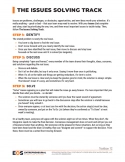
Get to the root of what’s stuck so your team can solve Issues for good.
What Common Mistakes Should You Avoid During Your First IDS Session?
The most common mistakes in an early IDS session involve losing focus, allowing discussions to repeat, or moving on before the team reaches a clear resolution.
Don’t Let Every Issue Become an Immediate Discussion
When an important problem comes up, the natural response is often to start talking about it right away.
If your team stops to solve every Issue during reporting, you may reach IDS with little time left for the problems that matter most.
As the facilitator, acknowledge the Issue, make sure someone adds it to the Issues List, and bring the team back to the agenda.
Once IDS begins, your team should quickly identify its three most important Issues rather than simply working down the list in order. Start with the highest priority, so your team focuses on the decisions and obstacles that matter most. Once you’ve solved those three, prioritize the next three. Repeat until it’s time to conclude.
Don’t Let the Same Conversations Keep Going in Circles
Your team may recognize a problem immediately because it’s something you’ve discussed before. That familiarity can be useful, but it can also lead people to repeat the same arguments without making progress.
You might hear competing explanations for why a problem keeps happening, or someone may suggest a familiar solution before the team agrees on what’s actually causing it.
When the conversation starts circling, bring everyone back to the Issue you’re trying to solve. The IDS process helps your team look beyond symptoms to identify the root cause. Ask whether you’ve reached that point and what information you still need to move forward.
Make room for different perspectives, especially when a problem affects multiple departments. Once everyone has contributed the relevant information, revisiting the same points is unlikely to help.
If a separate problem comes up, add it to the Issues List rather than letting it redirect the discussion.
Don’t Mistake a Good Conversation for a Resolved Issue
A discussion can feel productive because everyone participated and agreed that something needs to change. That doesn’t necessarily mean the team solved the Issue.
For example, your team might agree that communication between departments needs to improve. Unless you’ve reached a decision about what that means, the same concern could return the following week.
Before moving on, confirm that everyone understands the resolution. When the resolution requires follow-up, assign a clear To-Do with an owner and a seven-day deadline.
Not every Issue requires a new To-Do. When an Issue needs more information, assign one person a To-Do to gather it by the next weekly meeting. Keep the Issue on the Issues List and revisit it with the facts.
Your team should know whether it has resolved the Issue or still needs to address it. That distinction determines what carries forward after the meeting, from assigned To-Dos to unresolved Issues that need another discussion.
What Should You Expect After Your First IDS Session?
After your first IDS session, your team should have a clearer understanding of its most important Issues, the decisions it reached, and what needs to happen next.
You may not solve everything on your Issues List, and that’s okay. Focus on solving the most important Issues first.
Before the meeting ends, make sure everyone understands the decisions you’ve made and who’s responsible for any follow-up. Keep unresolved Issues on the Issues List and prioritize them again at your next weekly meeting. At your next weekly Level 10 Meeting, your team will review the To-Dos assigned during IDS to make sure those commitments haven’t fallen through the cracks.
Don’t expect everyone to feel comfortable with the process right away, either. Your team may need reminders to add Issues to the list rather than discussing them immediately, or it may take time to get used to having more direct conversations.
Each weekly meeting gives your team another opportunity to build those habits, strengthen its discussions, and become more effective at solving problems together.
Get Ready for Your First IDS Session
Your first IDS session doesn’t have to be perfect. What matters is giving your leadership team a consistent way to address its most important challenges and build better problem-solving habits over time.
Download the Issues Solving Track to give your team a shared process for your next Level 10 Meeting.
Want help bringing this kind of structure and accountability to your leadership team? Schedule a free 90-Minute Meeting with an EOS Implementer to explore how EOS can help your business gain traction.
Ready to implement EOS?
An EOS Implementer helps your team install the full system and execute it with confidence.
Frequently Asked Questions
What Is the EOS Issues Solving Track?
The EOS Issues Solving Track is a three-step process called Identify, Discuss, Solve (IDS). Leadership teams use it to uncover the root of an Issue, discuss the information they need to address it, and solve it for good.
How Do You Find the Root Issue in EOS?
Finding the root Issue in EOS means looking beyond the symptoms of a problem to understand what’s actually causing it. During Identify, your team asks questions and clarifies the Issue before discussing solutions. This helps prevent the same problem from returning because the team never addressed its underlying cause.
What if My Team Can’t Solve Every Issue During IDS?
If your team can’t solve every Issue during IDS, keep the unresolved items on your Issues List and prioritize them again at your next weekly meeting. The goal is to resolve your most important Issues, not to clear the entire list in one session.