The most dangerous person in your organization might be your highest-performing employee. Here’s why yesterday’s rock star sometimes becomes today’s cynic, and what leaders can do about it.
I’ve seen a difficult pattern in organizations: employees who’ve contributed the most can have the greatest influence when their attitudes change. They’ve earned credibility, and their coworkers listen to them.
When that influence turns cynical, it can undermine trust in leadership and belief in the company’s direction.
In other words, credibility + negativity = cultural damage.
When the Rock Star Becomes the Cynic
The cynical employee usually isn’t loud. They’re often respected. They’ve been around for years and have earned credibility.
But when someone else proposes a new initiative, you hear their sigh or see their eye roll. The cynical employee leans back in their chair and says, “We tried that five years ago, and it never worked,” or “Leadership will just change its mind next quarter, so let’s not even bother.”
The cynical employee might even nod in agreement during a meeting but talk about the person who suggested the idea behind their back.
And people listen because this person has been right before. They’ve earned their reputation through years of hard work and good judgment. So when they start questioning leadership’s intentions or dismissing new ideas, their coworkers pay attention.
EOS is built on a powerful belief: every issue is solvable if the right people identify it, discuss it openly, and solve it through the IDS process.
But cynicism attacks that belief at its core. People begin to wonder why they should bother raising issues if nothing will change anyway.
What Does a Cynic Look Like?
Instead of asking, “How do we solve this?” the cynic asks, “Why bother?” Instead of entering healthy conflict for the Greater Good of the Organization (GGOTO), they withdraw or take shots from the sidelines. They stop adding issues to the Issues List because they’ve convinced themselves nothing will change anyway.
Eventually, the Level 10 Meeting becomes something people attend instead of something they believe in. Every cynical comment is an invitation for someone else to lower their standards.
When people believe leadership won’t listen, they stop speaking. The problems you need to hear and the ideas to solve them go unspoken.
The Five Thieves Robbing Your Issues List explores some of the same reasons why people hold back from raising issues. Cynicism can be especially damaging here because one respected employee’s attitude can influence how others participate in meetings, respond to new initiatives, and approach their own responsibilities.
EOS doesn’t require blind optimism. It calls for open, honest discussion. Asking hard questions and raising concerns are part of that.
What becomes a problem is when someone repeatedly dismisses ideas before anyone can explore them, shuts down other people’s input, or nods along in the meeting and then undermines the decision afterward. That behavior makes it harder for everyone to have an honest conversation and work through the issue together.
At the same time, leaders need to be careful not to mistake frustration for cynicism. An employee who’s frustrated because the same issues keep getting ignored might have a legitimate complaint. Listen to what they’re saying before deciding you’ve got a cynic on your hands.
What Should Leaders Do About Cynicism?
First: Recognize that cynicism is usually a symptom, not the disease.
When someone says, “Nothing ever changes around here,” don’t just dismiss the comment. Look in the mirror as a leader and ask yourself if there is some truth in it.
- Does leadership consistently follow through on what it says it will do?
- Have you made promises that never materialized?
- Have you allowed the same problems to surface quarter after quarter?
When employees stop believing accountability matters, examine your EOS accountability tools. When they stop believing in the vision, ask whether you’ve been communicating and living the vision in your V/TO (Vision/Traction Organizer) consistently.
And if this person used to be one of your rock stars, ask them what changed. Was there a specific incident? Have they raised concerns that weren’t addressed? Don’t assume you know why their attitude has changed without having the conversation.
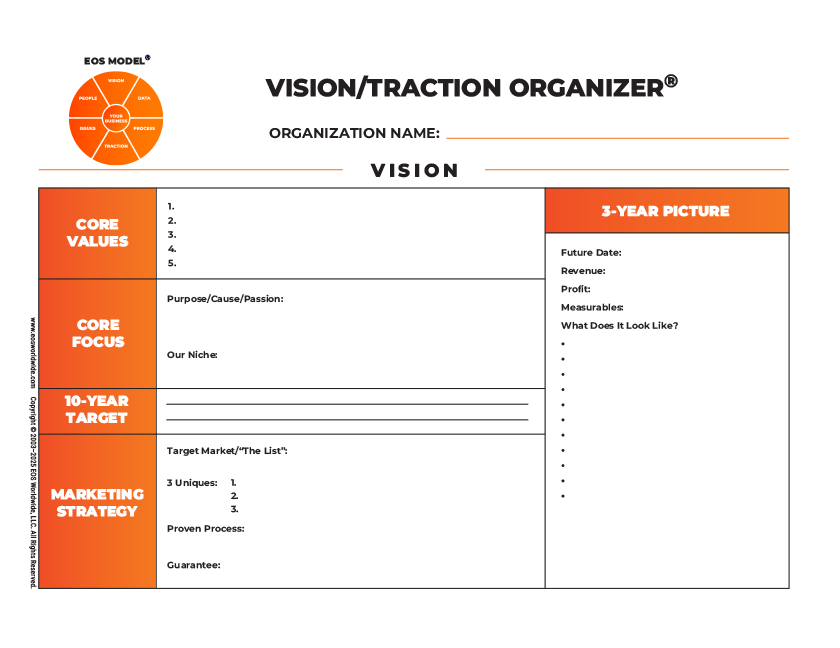
Turn scattered ideas into one clear vision your team can follow.
Second: Solve the issues you’ve allowed to linger.
Many organizations don’t become cynical because they have difficult problems but because those problems stop getting solved. Are you regularly solving the most important issues in your L10s? Or do the same issues keep appearing because nobody wants to address them?
Cynical people feed on a lack of accountability and unresolved issues. EOS should be attacking the environment that creates cynicism.
Think about the issues your leadership team has discussed repeatedly without resolving. Employees notice when problems keep coming up and nobody takes responsibility for fixing them. Leaders should be responding to problems, not avoiding or creating them.
Third: When people raise issues, prove that their voice matters.
Make sure the issues get added to the Issues List. Prioritize the most important issues and use IDS (Identify, Discuss, Solve) to get to the root cause, discuss the issue openly and honestly, and agree on a solution. Capture any required action as a To-Do with one owner, due within seven days. Review completion at the next Level 10 Meeting.
And tell the person who raised the issue what happened. They might not have been in the room when it was solved. If they never hear the outcome, they might assume their concern was ignored.
Every time leadership engages in healthy conflict, solves an issue, and follows through with action, trust grows. People see that raising issues is worthwhile, and they’re more likely to speak up the next time something isn’t working.
Fourth: Don’t let cynicism lurk in the shadows.
Address it directly. Have an honest, private conversation with the person, especially if they’ve been valuable to the organization for years. Find out whether there’s something behind their attitude that leadership needs to address.
But once you’ve heard them out, set expectations. Being a strong performer doesn’t give someone permission to undermine the rest of the team.
Use the People Analyzer to evaluate whether they’re meeting your company’s Core Values bar. Address the behavior promptly, with specific examples and clear expectations. Give them the opportunity to improve. If the issue persists, use the Three-Strike Rule, bringing at least three specific examples of each issue to each meeting. Keep those meetings separate from the Quarterly Conversation.
And if someone ultimately chooses cynicism over contributing to the Greater Good of the Organization, help them find another organization where they’re a better fit.

See who fits your Core Values and where people issues need attention.
A Test for Your Leadership Team
When employees raise an issue, do they genuinely believe they will be heard and that the issue will be addressed?
Don’t just answer that question for yourself. Think about how your employees would answer it. What examples would they give of leadership following through? What problems would they point to that have been raised repeatedly without being solved?
Every Level 10 Meeting, every IDS, and every commitment you follow through on affects how much people trust your leadership team. So does every issue you ignore.
The most dangerous sentence in any organization isn’t “We have a problem.” All healthy companies have problems. The most dangerous sentence is “Why bother?”
Organizations don’t die from having issues. They die from deciding the issues aren’t worth solving.
Questions for Your Next L10
- Do we have cynics in our midst? If so, what are we going to do about it? Is this isolated to one person or one department, or is it becoming part of our culture?
- If a new employee joined today, what evidence of cynicism might they notice in their first month?
- Look in the mirror. Have I become cynical and modeled that cynicism is okay?
- What unresolved issues have we allowed to linger? And which ones do we need to finally solve?
If your leadership team has been struggling with unresolved issues, weak accountability, or employees who’ve stopped speaking up, a free 90-Minute Meeting is an opportunity to see how EOS approaches these problems.
During the meeting, an EOS Implementer will learn about your business, provide an overview of the EOS Model and EOS Tools, and explain the EOS Process.
Ready to implement EOS?
An EOS Implementer helps your team install the full system and execute it with confidence.