

An employee is in the right role when they understand their job, want to do the work, and have the capacity to do it well.
If an employee doesn’t meet one of these criteria, you might notice their responsibilities falling back on you or the rest of the team. And without understanding what’s really getting in the way, you can spend months asking for improvement without seeing any real progress.
Getting clear about the problem helps you make the best decision for everyone involved. Start by defining what the job requires and understanding where the employee is struggling. Then consider whether the concern involves the work itself or how the employee’s behavior aligns with your company’s values. These distinctions help you decide whether clearer expectations, additional support, or a different role is the right next step.
Define What the Role Requires
Before you can judge whether an employee fits a role, you need to define what the role requires and make sure those expectations are clear to the employee.
A job description can help, but it may not reflect everything the person is now responsible for. As your business grows, you may assign work to whoever is available or has handled something similar before. Over time, that can leave an employee with responsibilities neither of you has discussed as part of the job.
Look at what the business actually needs from the role, then clarify:
- What the employee is accountable for.
- Which decisions the employee can make without your approval.
- Where the employee’s responsibilities meet those of other team members.
- What successful performance looks like.
Ask the employee to explain how they understand the job, too. You may discover that a responsibility you thought you’d handed over is one the employee still believes belongs to you. Or you may find that two people are each waiting for the other to act.
Also consider whether the workload is reasonable. If the job has grown beyond what one person can handle, address that before concluding that the employee can’t do it.
This gives you a fair starting point for evaluating fit: a clearly defined job, rather than a collection of assumptions about what the employee should be doing.
How to Evaluate Whether an Employee Fits Their Role
Once the job is clear, evaluate whether the employee fits the role by looking at their understanding of the work, desire to do it, and capacity to deliver.
Consider the whole role rather than letting a few strengths or frustrations shape your judgment. An employee may do some work exceptionally well while consistently leaving another important responsibility to someone else. Understanding why requires a closer look at each of these three questions.
Do They Understand the Work?
An employee understands the work when they see how the role’s responsibilities fit together and can recognize what needs their attention.
That’s more than knowing the steps in a task. It includes understanding why the work matters, how it affects other people, and when a decision needs to be made.
Ask how the employee decides what to prioritize and when to involve you. Listen to the reasoning behind those decisions. If the employee keeps waiting for instructions on work you expect them to own, find out whether you’ve clearly explained both the responsibility and the authority to act.
If expectations haven’t been clear, correct that first. If they have, consider whether the employee understands how to handle the role without needing you to direct each step.
Do They Want the Responsibilities?
An employee wants the responsibilities when they genuinely want the work the role involves, rather than just the title or recognition that comes with it.
This can be difficult to discuss when someone has worked hard to earn a position. The employee may feel they should want the job, even after discovering that the daily work isn’t what they expected.
Ask which responsibilities the employee wants to take on and which they tend to avoid. Reluctance doesn’t automatically mean a lack of interest; the employee may lack confidence or need support. The conversation should help you distinguish between wanting help with the work and not wanting the work itself.
Make room for an honest answer. Recognizing that a role doesn’t suit someone doesn’t erase the value of that employee’s contribution.
Can They Fulfill the Whole Role?
An employee can fulfill the whole role when they have the skills, judgment, time, and capacity to handle its full demands.
When someone understands and wants the job but still struggles to deliver, look closely at what’s missing. A particular skill may need development, or competing responsibilities may leave too little time for the work you’re asking them to prioritize.
Some capacity gaps can close with training, experience, and support. Others may be too substantial to close soon enough to meet the business’s needs. Consider both the employee’s potential to develop and the demands of the role before deciding whether improvement is realistic.
Consider How the Employee Fits Your Company
Alongside role fit, consider how the employee fits your company by looking at whether their behavior reflects your values.
Keeping these questions separate matters when you’re deciding what a performance problem means. An employee may share your values and have made a valuable contribution while struggling with responsibilities that don’t suit them. That gives you a reason to explore a different role, if the business needs one.
The reverse is also possible. Someone may deliver strong results while behaving in ways that conflict with the standards you expect everyone to uphold. Changing that employee’s responsibilities won’t necessarily address the concern, because the issue is how the person works, not whether they can do the job.
Use specific observations to explain the difference. Describing a responsibility the employee isn’t fulfilling or behavior that conflicts with a shared value gives you something concrete to discuss. A general statement that someone “isn’t a good fit” leaves both of you guessing about what needs to change.
What Does Right Person, Right Seat Mean in Business?
The Entrepreneurial Operating System (EOS) calls its approach to assessing company fit and role fit Right Person, Right Seat. It gives you a structured way to evaluate the two questions discussed above: Does the employee share your company’s Core Values, and do they understand, want, and have the capacity to fulfill their role?
EOS is a complete, proven system with simple, practical tools that helps entrepreneurs get what they want from their businesses. Its approach to people decisions starts with defining what the business needs, then evaluating who fits those responsibilities and the company’s values.
A Right Person shares the company’s Core Values at or above the minimum standard your leadership team establishes, called The Bar. A person is in the Right Seat when they Get it, Want it, and have the Capacity to do the work. Those three criteria are known as GWC.
Three tools help you apply these distinctions:
- The Accountability Chart defines the structure your business needs, the major responsibilities within each seat, and who is accountable. You establish the structure before deciding who should fill the seats.
- GWC evaluates whether an employee fits a specific seat. Each criterion receives a Yes or No, and all three must be Yes to establish Right Seat.
- The People Analyzer brings Core Values alignment and GWC together, helping you distinguish a company-fit issue from a role-fit issue.
Together, these tools help you move from a general concern about an employee’s performance to a specific understanding of what needs attention.
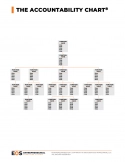
Map your structure, roles, and ownership so everyone knows who’s accountable for what.
Turn the Assessment into a Plan with the Employee
Turning the GWC and People Analyzer assessments into a plan starts with explaining what you’ve observed and hearing the employee’s perspective. A competing priority or missing resource may change your understanding of the problem and the support the employee needs.
If responsibilities are still unclear, work through those expectations together. The Accountability Chart can help you define what the role needs to own and give both of you a clear basis for evaluating progress.
When development is realistic, agree on the support you’ll provide, the improvement you expect, and when you’ll review it. If the employee shares your values but doesn’t fit the role, consider whether another needed position would be a better match. That position should serve a genuine business need, rather than exist solely to avoid a difficult decision.
If the concern involves behavior that conflicts with your values, explain the expectations and give the employee an opportunity to improve. Strong job performance shouldn’t make that conversation optional.
A suitable alternative role won’t always exist, and not every situation will have an easy resolution. The goal is to move beyond repeatedly asking for improvement and address what’s actually preventing the employee from succeeding.
When you’re having the same conversations with multiple employees, the problem may extend beyond individual role fit. Unclear responsibilities and inconsistent accountability can make it difficult for even capable employees to succeed. Schedule a free 90-Minute Meeting with an EOS Implementer to learn how EOS approaches these challenges and decide whether the system is a fit for your company.
Ready to implement EOS?
An EOS Implementer helps your team install the full system and execute it with confidence.
Frequently Asked Questions
How do I evaluate team fit in my business?
Evaluate team fit by considering both alignment with company values and fit with clearly defined responsibilities. Use observed behavior to assess values alignment, then determine whether each employee understands, wants, and has the capacity to fulfill their role. Discuss your observations with employees before deciding what needs to change.
Can a good employee be in the wrong role?
A good employee can be in the wrong role even when they share your company’s values and have a strong track record. The current job may require work they don’t understand, don’t want, or don’t have the capacity to handle. That’s why role fit depends on the job’s responsibilities, rather than on the employee’s loyalty or past performance alone.
Does being in the wrong role mean someone should leave the company?
Being in the wrong role doesn’t automatically mean someone should leave the company. Clearer expectations, development, or a move to another needed position may address the mismatch. A suitable role won’t always exist, so consider the employee’s fit alongside the work the business genuinely needs.