



What Is GWC?
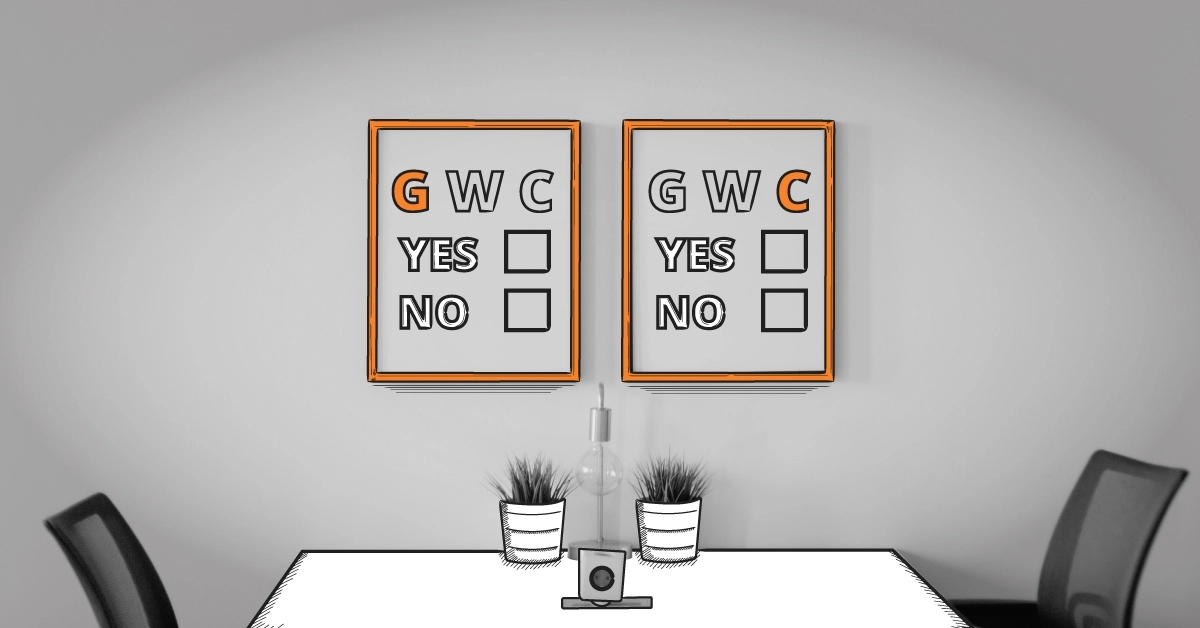
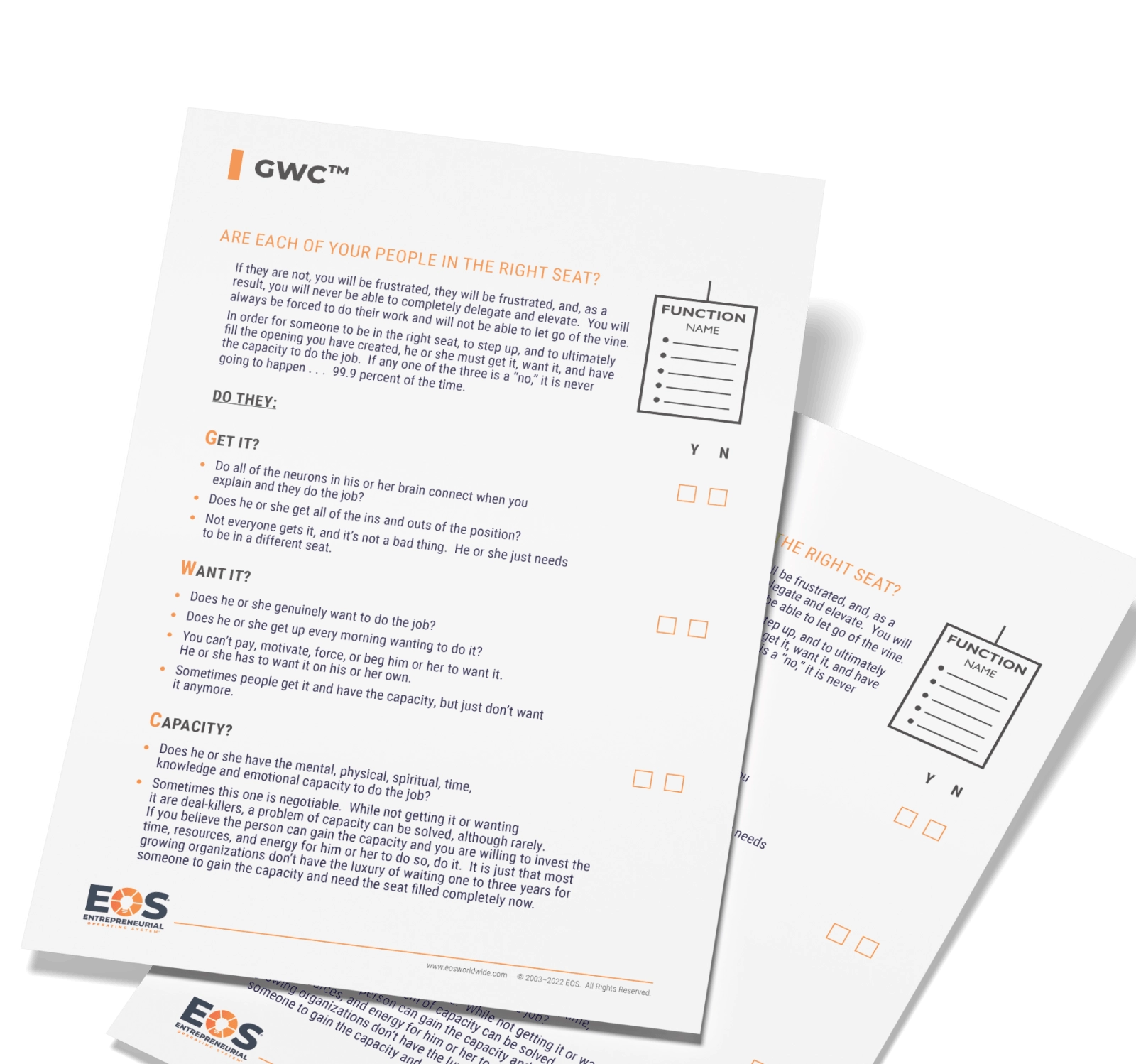
GWC stands for Gets It, Wants It, and Capacity to Do It.
It gives you a simple way to determine whether someone understands the seat, genuinely wants the work, and can do it well.
All three matter. A person needs a yes in each area to be in the Right Seat.
Each Measurable has one owner and one weekly goal, so your team can make decisions with facts, spot changes early, and see where to act.
Why Use GWC?
GWC helps you pinpoint why someone may be struggling in a seat.
Someone may understand the work but not want to do it. Another person may want the opportunity but lack the capacity the seat requires.
Those gaps call for different responses.
GWC gives you a clear way to assess fit before deciding what to do next.
What Does GWC Mean?
GWC looks at three separate requirements of a seat: Gets It, Wants It, and Capacity to Do It.
Gets It
Gets It means the person naturally understands the role and how the work fits together.
They grasp what the seat requires, why the responsibilities matter, and how to make the right decisions within it.
Getting It is more than having the job explained to you.
Wants It
Wants It means the person genuinely wants to do the work.
They want the responsibilities that come with the seat, not just the title, opportunity, or compensation.
Desire matters because you cannot assume that coaching, pressure, or more money will make someone want work they fundamentally do not want.
Capacity to Do It
Capacity to Do It means the person has the ability required to perform well in the seat.
That can include the time, skills, knowledge, emotional capacity, physical capacity, and intellectual capacity required to perform well in the seat.
Capacity is about whether the person has what the seat requires overall, including the time and ability to do the work well.
How Do You Use GWC?
Start with the seat, not the person.
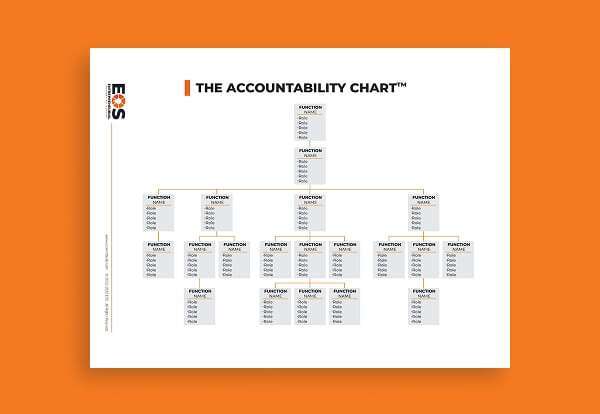
Use the Accountability Chart to clearly define the seat and ensure you understand the responsibilities that come with it.
Then ask three questions about the person:
Do they Get It?
Do they Want It?
Do they have the Capacity to Do It?
Answer each one yes or no.
GWC does not use an average or composite score. A person needs three yes answers to GWC the seat.
What Does a No in GWC Mean?
A no in GWC means the person does not currently meet one of the seatโs requirements.
The next step is understanding which requirement is missing.
A no for Gets It is different from a no for Wants It. A capacity gap creates a different conversation again.
Some capacity gaps may be fixed when the person can realistically gain the ability and the company is willing to invest the time and resources. But this is a specific situation, not an assumption that every capacity problem can be trained away.
A no in any one area means the person does not currently GWC the seat. Address the specific gap, then determine whether there is a realistic path to meeting the seatโs requirements or whether a different seat or people decision is needed.
How Is GWC Different From Core Values?
GWC and Core Values answer different people questions.
Core Values help you determine whether someone is the Right Person for your company.
GWC helps you determine whether that person is in the Right Seat.
Someone can fit your Core Values and still struggle in a particular seat. Someone may also be capable of doing the job while failing to meet your Core Values standard.
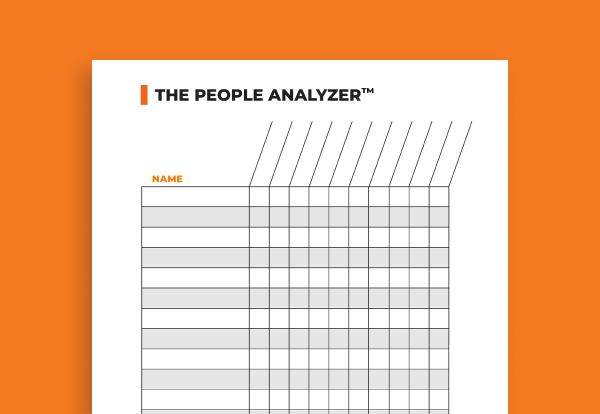
The People Analyzer brings both assessments together because EOS calls for the Right People in the Right Seats.
How Does GWC Connect to EOS?
GWC connects the seat your business needs with the person responsible for filling it.
The EOS Toolbox
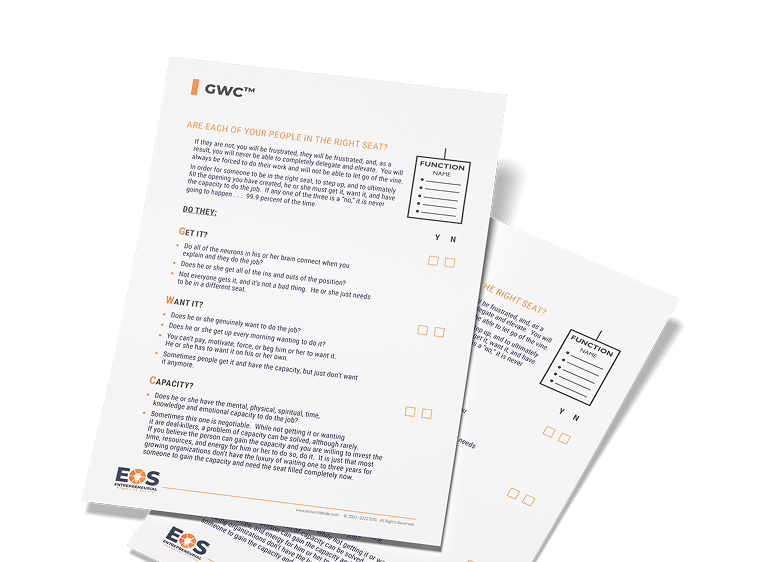
Download the Free GWC Tool
Use GWC to get a clearer view of whether someone Gets It, Wants It, and has the Capacity to Do It for the seat.
Want to Go Deeper?
Explore simple, practical EOS resources to help you get more from the tools.