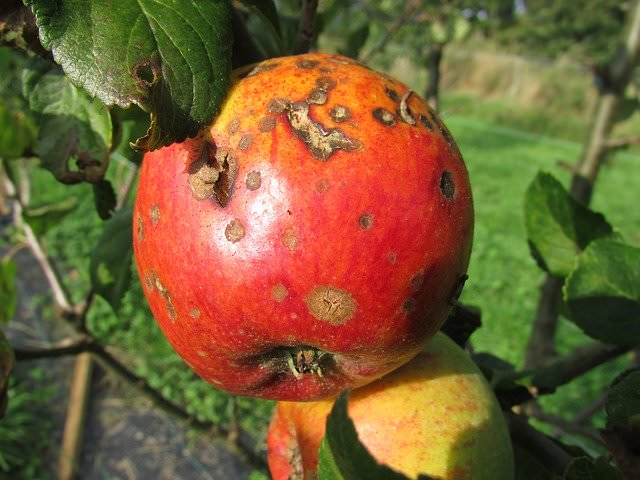
 Have you ever picked apples at an apple orchard? Trees burgeoning with plump, perfectly shaped apples, ripe for the picking. Growing up in California, we had such a prolific tree in the backyard of our house. During August and early September, Mom would send me out to pick the apples and gather up the strays lying on the ground. I’d haul them into the house with a bushel basket and Mom would turn most of them into applesauce. The very best specimens were sliced up, covered with dough and baked into Mom’s excellent apple pie.
Most of the apples, hanging enticingly from the branches, looked perfect. Or at least until you grabbed one and studied it more carefully. You know, one side of the apple looked great, but when you turned it over you’d find a wormhole or a deep bruise. Damaged goods.
But how many times have you taken a bite before performing your due diligence—checking it out from every angle?
 Imagine the scene: you enter the packed press room and immediately sense the energy from the crowd of reporters. You take a seat at the long table amidst what seems like a sea of cameras, microphones, tangled wires, and bright lights. A reporter from Entrepreneur Magazine stands to ask the first question, and a hush falls over the room. “How confident are you that your team can take you all the way to the championships this year?”
 If you’re like most bosses, you do most of the talking. Frankly, this one-way-street behavior needs to change. Your job is to ensure that the dialogue is 80/20, where your direct report is doing 80% of the talking and you’re talking only 20% of the time. The only way to make that happen is to ask questions instead of making statements.